

Especially researched for IBS
Been shown to increase iron absorption
Trials show strain’s ability to help with IBD symptoms

Lactobacillus plantarum LP299v® under the microscope
Lactobacillus plantarum 299v® (LP299v®) is one of the most researched strains from the L. plantarum species of bacteria. Bacteria from this species are rod-shaped and gram positive; they’re known to be highly adaptive and so are found in a wide variety of different sources, including vegetables, meat, fish, and dairy products. They also seem to be one of the best probiotic strains for use in cultured foods, and so are found in many fermented foods such as kimchi, sauerkraut, pickles, olives, and sourdough. Consequently, Lactobacillus plantarum strains are commonly found in the gastro-intestinal tract. Over the past decade or so, there has been an increasing number of studies which have attempted to identify the beneficial effects of numerous different L. plantarum strains on human health; however, the Lactobacillus plantarum 299v® strain is by far the most widely researched member of the species. As of April 2020 L. plantarum has been officially reclassified to Lactiplantibacillus plantarum subsp. plantarum so the full strain name may also be referred to as Lactiplantibacillus plantarum subsp. plantarum LP299v® (Zheng J et al., 2020).

You are here: The strain LP299v® is part of the plantarum species and the Lactobacillus genus
Lactobacillus plantarum 299v® – Safety and Survival
Lactobacillus plantarum 299v® is a food supplement with research demonstrating its safety and survival to reach the gut alive. A commercial formula containing the strain was tested in individuals to assess safety in 2012 by Krag, A. et al., and on analysis of the results the authors deemed the strain to be safe and generally well tolerated. This was also confirmed in a previous study by Adawi, D et al., in 2002, who assessed the safety of the strain in an animal model.
In 2006, a study published by Goossens, D. et al., found L. plantarum 299v® to be present in stool samples and in some mucosal samples after oral administration indicating successful passage through the digestive tract. A previous study by Goossens, D. et al., (2005) also confirmed these results concluding the strain was able to reach the gut alive.

Lactobacillus plantarum 299v® (LP299v®) and Irritable Bowel Syndrome (IBS)
Irritable Bowel Syndrome is an increasingly common digestive disorder which encompasses a broad range of symptoms, including diarrhoea, constipation and bloating. Once any serious underlying causes have been ruled out, then medical professionals are limited in the options they can offer for management of the condition due to the variations in cause and symptoms, heterogeneity of this condition. The use of probiotics is being investigated as a useful addition to conventional solutions, and this is why the majority of strains featured in this database have been researched for IBS symptoms.
A double-blind, randomised, placebo controlled 4 week study investigated whether the introduction of a probiotic would affect symptoms of pain and bloating in 60 IBS patients. After 10 days of supplementation with the Lactobacillus plantarum 299v® strain, tests revealed that the probiotic had adhered to the gut lining and was still present 10 days post supplementation’ in 84% of the treatment group. The probiotic group also experienced a decrease in symptoms of flatulence. After four weeks of supplementation, twice as many patients from the probiotic group reported less flatulence than those in the placebo group, as well as experiencing less pain and more consistent bowel movements. This positive difference in results between the probiotic and placebo group was still evident twelve months later (Nobaek S. et al., 2000).
In a further study, a total of 214 IBS (of either sub-type) patients were recruited and randomly divided into two groups, a treatment group and a control group. Those in the treatment group were given a capsule containing the probiotic LP299v®, while those in the control group were given a placebo. Incidences of bowel frequency, abdominal pain, bloating and feelings of incomplete rectal emptying were all assessed weekly, and stool frequency was also monitored. Results showed that LP299v® helped with the symptoms of IBS, most particularly with pain and bloating (Ducrotté P. et al., 2012).
Other relevant studies: Niedzielin K. et al., (2001), Ribeiro HJ (1998), Sen S. et al., (2002), Simren M. et al., (2006), Stevenson C. et al., (2014), Young R., (1997).
Lactobacillus plantarum 299v® (LP299v®) and Iron Absorption
Iron deficiency is an extremely prevalent and concerning nutritional deficiency that is becoming a major global health concern. It is a particularly common symptom in menstruating women. Both over-the-counter and prescription iron supplements are widely used, but even with supplementation, this additional iron may not be well-absorbed due to digestive insufficiencies and poor bio-availability. Unabsorbed iron in the gut is associated with constipation.
There has been some interest in the use of probiotics to help with iron deficiency, as lactic-acid fermented foods have been shown to help increase iron absorption via a series of different factors. This positive effect is believed to be due to the lactic acid preventing the formation of less bio-available iron molecules, and the presence of such organic acids delaying gastric emptying and exposing iron molecules to the intestinal lining for longer periods. Research on Lactobacillus plantarum 299v® suggests that this particular strain may be of particular benefit for improving the absorption of iron in the small intestine (Hoppe et al., 2015).
This potential was illustrated in a single blind, randomised study using 24 healthy women of childbearing age (with an average age of 25 years old). The women were given four different types of gruel-based meals over four consecutive days: fermented gruel containing live LP299v®, pasteurised fermented gruel, pH-adjusted non-fermented gruel, and non-fermented gruel with added organic acids. Iron absorption was measured 14–18 days after intake. It was found that, after consuming a meal with high amounts of phytic acid (which inhibits absorption), LP299v® increased iron absorption by 80% in comparison with the other meals. The researchers therefore confirmed that LP299v® alone may increase iron absorption (Bering S. et al., 2006).
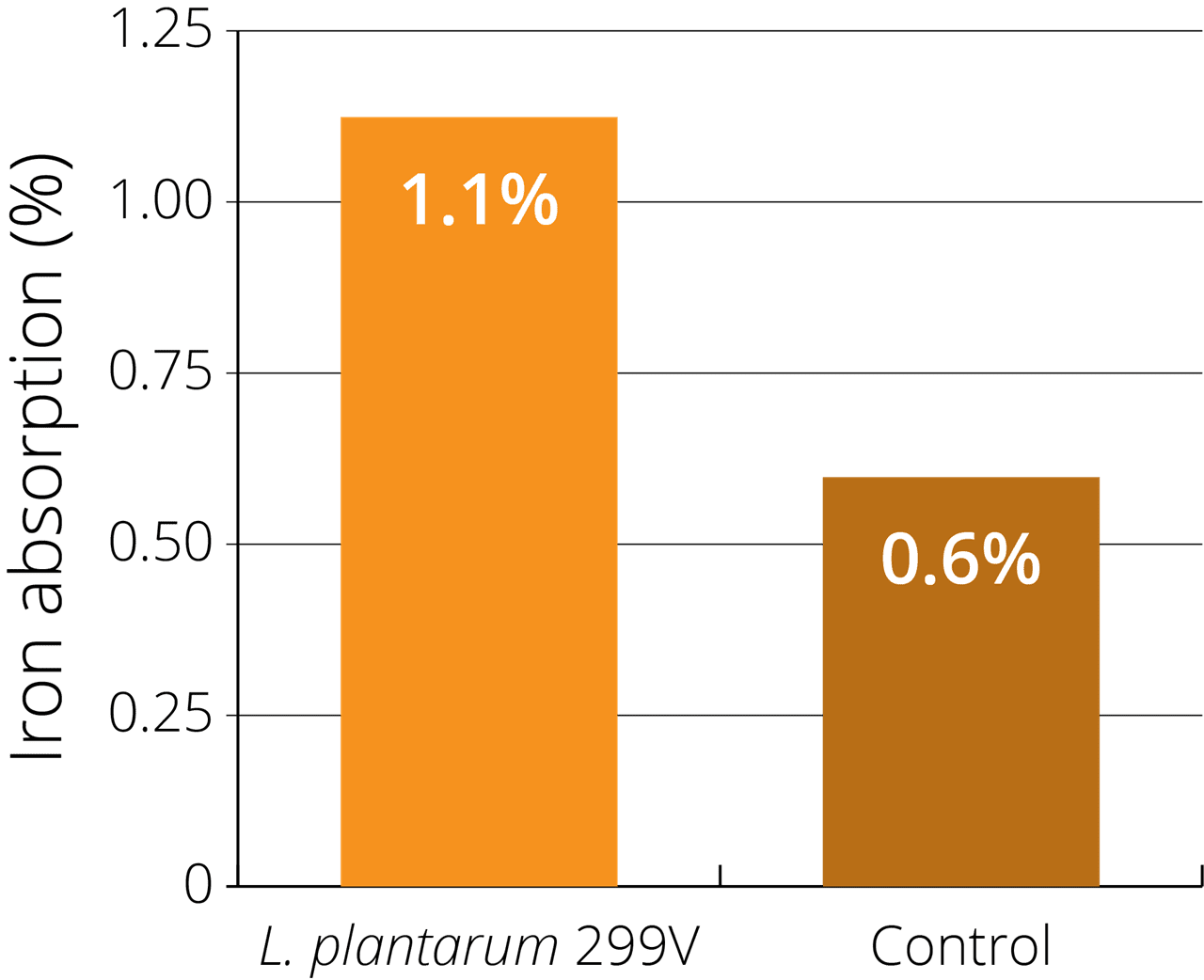
Graph 1 - results show that L. plantarum 299V can increase absorption of iron
Other Relevant Studies: Bering S. et al., (2007), Hoppe et al., (2015), Johansson et al., (1993).
Lactobacillus plantarum 299v® (LP299v®) and Inflammatory Bowel Disease (IBD)
Inflammatory Bowel Disease (IBD) is a collective term referring to a group of bowel disorders where inflammation level is a key marker. The two primary conditions in this group are ulcerative colitis and Crohn's disease, both of which are characterised by intestinal inflammation, and cause a variety of other symptoms such as diarrhoea, abdominal cramping, fatigue, fever and weight loss. It is now widely accepted that the balance of intestinal bacterial flora contributes significantly to the pathogenesis of inflammatory bowel disease, and so probiotics are being considered as a possible supportive supplement.
With the aim of exploring the impact of probiotic supplementation on the symptoms of IBD, an uncontrolled pilot study in Copenhagen observed 39 patients with mild to moderate active ulcerative colitis. All patients received a fermented oat drink containing LP299v® twice daily for 6 months. At the end of the study period, it was found that 24 out of the 39 taking the probiotic drink reported a 50% reduction their SSCAI (Simple Clinical Colitis Activity Index) score (Krag et al., 2012).
Building on these results, the study authors conducted a randomised controlled trial using 74 patients who were experiencing a mild to moderate flare up of their ulcerative colitis symptoms. The patients were randomly divided into two groups, one in which the patients received a fermented oat drink containing LP299v®, and another group in which the subjects received an energy drink containing protein and vitamins, which is often given to IBD patients. After 8 weeks of treatment, the mean reduction (as defined by the SSCAI score) in IBD symptoms was higher in the probiotic group, with over 50% of the patients showing an improvement (Krag A. et al., 2013).
Further Related Studies: Berggren A. et al., (2006), Jones C. et al., (2013), Lönnermark E. et al., (2015), McNaught C.E. et al., (2002), Wullt M., (2003).
Lactobacillus plantarum 299v® (LP299v®) and Antibiotic-Associated Diarrhoea and Clostridium Difficile
Lactobacillus plantarum 299v® has been shown to have exceptional adherence and colonisation abilities to mucosal surfaces, even in the presence of antibiotics. A healthy presence of good bacteria helps to prevent pathogenic bacteria colonising in the intestine, which can often be a problem when taking antibiotics. The antibiotic medication can wipe out populations of beneficial microorganisms and allow pathogenic species such as Clostridium difficile to overgrow, causing associated diarrhoea symptoms. LP299v® has been shown to help alleviate antibiotic-associated diarrhoea (AAD), caused by Clostridium difficile infection, and helps to combat the proliferation of pathogenic bacteria.
A double-blind study observed 44 critically ill patients with an aim of assessing the positive benefits of the probiotic on the incidence of C. difficile infection. The subjects were randomised to be given either dose of LP299v® or a placebo. In the placebo group there was a 19% incidence of C. difficile infection, compared to the probiotic group, in which none of the patients contracted C. difficile infection (Klarin et al., 2008).
A further placebo-controlled study using 163 patients investigated the effect of LP299v® given both during a course of antibiotics and for a period after the course of medication. The overall risk of developing loose or watery stools, or nausea was significantly reduced among patients receiving the probiotic drink, compared to the placebo group. The results indicate that intake of L. plantarum 299v® may have a preventive effect on gastrointestinal symptoms during antibiotic treatment (Loennermark et al., 2010).
Other Relevant Studies: Kujawa-Szewieczek A., (2015), Levy J. (1997), Mack D.R. et al., (1997), Wullt M. et al., (2007).
Lactobacillus plantarum 299v® (LP299v®) and Immunity
There have been some promising preliminary studies which have explored the use of probiotics to reduce mucosal inflammation. It was found that when LP299v® adhered to the mucosal membrane of the intestine wall, the numbers of gram negative bacteria (typically pathogenic) reduced substantially. This was a significant finding, as such bacteria contain endotoxins, and even a small number can cause an extreme inflammatory reaction. This effect is thought to down-regulate the hosts ‘immunological defence’. Further research is required (Molin G., 2001).
Further Related Studies: Cunningham-Rundles S. et al., (2000), Cunningham-Rundles S. et al., (2011), McCracken et al., 2002), McNaught et al., (2005), Woodcock N.P. et al., (2004).
Authors: Information on this strain was gathered by Joanna Scott-Lutyens BA (hons), DipION, Nutritional Therapist; and Kerry Beeson, BSc (Nut.Med) Nutritional Therapist.
As some properties & benefits of probiotics may be strain-specific, this database provides even more detailed information at strain level. Read more about the strains that we have included from this genus below.
Lactobacillus acidophilus strains: Lactobacillus acidophilus LA-05, Lactobacillus acidophilus NCFM®, Lactobacillus acidophilus Rosell-52.
Lactobacillus casei strains: Lactobacillus casei Shirota, Lactobacillus casei DN-114001.
Lactobacillus plantarum strains: Lactobacillus plantarum LP299v.
Lactobacillus reuteri strains: Lactobacillus reuteri Protectis and Lactobacillus reuteri RC-14®.
Lactobacillus rhamnosus strains: Lactobacillus rhamnosus GR-1® , Lactobacillus rhamnosus HN001 and Lactobacillus rhamnosus Rosell-11.
Lactobacillus paracasei strains: Lactobacillus paracasei CASEI 431®.
For more info and the latest research on probiotics, please visit the Probiotic Professionals pages.