

One of the most studied strains for women’s intimate health
Proven in numerous studies to help with thrush, bacterial vaginosis & cystitis
Often trialled alongside L. reuteri RC-14®
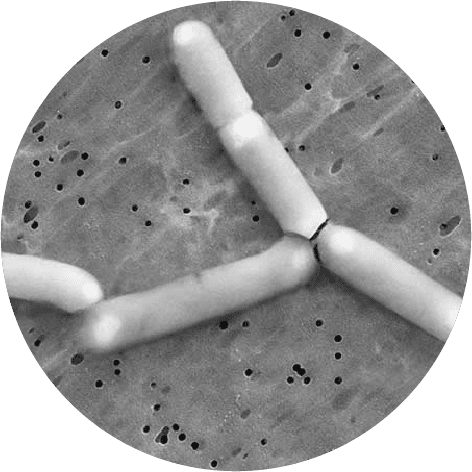
Up close: microscopic image of Lactobacillus rhamnosus GR-1®
This strain is one of the most well documented probiotics for women’s intimate health, and fully deserves its place in this database of the world's best probiotic strains. It is a lactic acid forming bacteria which is rod shaped, gram positive, does not form spores and can move itself with flagella. It is best known for its ability to improve the balance of the vaginal microflora and has been extensively researched for this purpose, usually alongside the strain Lactobacillus reuteri RC-14®. The GR-1® strain is a member of the Lactobacillus rhamnosus species. As of April 2020 L. rhamnosus has been officially reclassified to Lacticaseibacillus rhamnosus so the full strain name may also be referred to as Lacticaseibacillus rhamnosus GR-1® (Zheng J et al., 2020).

You are here: GR-1® strain is part of the rhamnosus species and the Lactobacillus genus
The research conducted so far suggests that Lactobacillus rhamnosus GR-1® helps to protect against, and help manage infections of pathogenic bacteria or yeast in the female urogenital area, such as Bacterial Vaginosis, thrush and urinary tract infections (UTIs) which are also known as cystitis. It’s believed that the probiotic helps to alleviate and prevent the infections by adhering to the urethra, and has been shown in vaginal mucosa swabs to be present after oral administration. Though it may also adhere to the intestinal walls. As it competes for position, it displaces and prevents adhesion of pathogens to vaginal mucosa; however, it is primarily active in the vagina and urogenital area (Reid et al., 1995, Ewid et al., 2002).
In addition to the competitive inhibition of pathogens, as it fights for space in the mucosa, Lactobacillus rhamnosus GR-1® further discourages these harmful micro-organisms by the production of lactic acid which lowers the pH in the vagina; this is not conducive to the survival of pathogens as they tend to thrive in an alkaline environment. The probiotic also produces substance called a biosurfactant which further discourage pathogenic bacteria and yeasts, and inhibit their growth (Reid G. et al., 1998, McGroarty, 1998). These substances help to break down the biofilms created by pathogens, which can also help to make drug therapy more effective; these slimy biofilm barriers help to shield these undesirable micro-organisms from the action of drugs which would normally eradicate them (Lee, 2009, p351), (Saunders S. et al., 2007), (Reid et al., 2017).

Lactobacillus rhamnosus GR-1® - Safety and Survival
Lactobacillus rhamnosus GR-1® is a food supplement which has been marketed around the world for a number of decades. Clinical trials have demonstrated its safety profile to be good, as would be expected from so many years of consumer use with no known cause for concern. Taking a look at one particular clinical trial that recorded incidence of adverse events, we see there is no difference between the probiotic and placebo groups. In this trial women took either L. rhamnosus GR-1® (in combination with Lactobacillus reuteri RC-14®) for 60 days. There was no difference in incidence of adverse events between the two groups, which demonstrates a satisfactory safety profile of this strain.
This strain has been detected in faecal samples and vaginal swabs following oral administration, which demonstrates good survival through the gut and as far as the vagina (Morelli, L. et al., 2004). In this trial faecal samples and vaginal swabs confirmed survival from 7 days after commencement of oral supplementation.
Lactobacillus rhamnosus GR-1® and Bacterial Vaginosis
Bacterial Vaginosis (BV) is an imbalance in the populations of microflora in the vagina caused when two situations manifest. Firstly harmful bacteria, such as Gardnerella vaginalis, proliferate and cause infection and secondly, there is also a relative reduction in the presence of beneficial Lactobacilli. An overgrowth of such pathogens typically results in classic symptoms of a thin white/ grey discharge with a ‘fishy’ smell. The condition is extremely common, with as many as one in three women suffering from BV at some point in their lives (Shamshu R. et al., 2017). Conventional treatment for BV is in the form of antibiotics, but their effect is often only temporary and the rate of reoccurrence is high, so there is increasing scientific and medical interest in effective, natural solutions such as probiotics.
The potential benefits offered by probiotics were demonstrated in a randomised, placebo-controlled trial using 64 healthy women. The subjects were given daily oral capsules containing Lactobacillus rhamnosus GR-1® in combination with Lactobacillus fermentum RC-14® for two months. Following the trial, the authors released the following statement regarding the results:
‘Culture findings confirmed a significant increase in vaginal lactobacilli at day 28 and 60; a significant depletion in yeast at day 28 and a significant reduction in coliforms [typically harmful bacteria] at day 28, 60 and 90 for lactobacilli-treated subjects versus controls.’ (Reid et al., 2003).
In 2013, a further randomised, double-blind, placebo-controlled trial was set up to assess the efficacy of the bacterial strains, Lactobacillus rhamnosus GR-1® and Lactobacillus reuteri RC-14®, in alleviating BV symptoms. The trial monitored 544 otherwise healthy women, who were all over the age of 18 and had been diagnosed with bacterial vaginosis. The subjects were either given a placebo, or the probiotic capsules, for a period of six weeks. Vaginal swabs were taken at week six, then again at week twelve, and it was found that the vaginal microbiota had normalised in 243 (61.5%) of women in the probiotic group compared to only 40 (26.9%) of the women in the placebo group. This was recognised as a statistically significant result (Vujic et al., 2013).
A later study attempted to assess the effects of probiotic supplementation alongside antibiotics. The researchers recruited 62 women with BV, who were equally divided to receive either the probiotic supplement containing Lactobacillus reuteri RC-14® and L. rhamnosus GR-1®, or a placebo, whilst taking the antibiotic Tin****ole. Changes in the vaginal microflora were monitored using 16S rRNA gene sequencing both before and after treatment. It was found that Lactobacillus reuteri RC-14® and Lactobacillus rhamnosus GR-1® induced an increase in the relative abundance of indigenous flora in women with BV, helping to restore vaginal homeostasis (Macklaim et al., 2015).
The results of this study were substantiated further in a subsequent randomised, placebo- controlled trial using 32 women aged 18-45 years, who had all been diagnosed with BV. The women were divided into two equal groups, a treatment group in which participants were given a probiotic supplement containing Lactobacillus reuteri RC-14® and Lactobacillus rhamnosus GR-1®, and a control group in which all women were given a placebo. Both groups were also given a course of antibiotics alongside the supplements for the first seven days of the trial.
The probiotic and placebo groups both took two capsules of their respective supplements for the first 30 days of the trial, and then reduced this to 1 capsule a day for a further 30 days. To assess the results, a cervicovaginal smear was taken at the baseline, and then again at day 30 and at day 60. The results indicated that 81% of the probiotic group had a normal vaginal pH within 30 days of taking the probiotic, compared to only 31% of women in the placebo group (Shamshu R. et al., 2017).
Further relevant studies: Anukam et al., (2006), Burton et al., (2003), Cianci et al., (2008), Hummelen et al., (2010), Kamala et al., (2009), Krauss-Silva et al., (2011), Martinez et al., (2009), Perisić et al., (2011), Petricevic et al., (2008), Reid et al., 2001a), Reid et al., (2001b), Reid et al., (2003), Reid et al., (2004), Thulkar et al., (2010).
Lactobacillus rhamnosus GR-1® and Urinary Tract Infections (UTIs)
A study has shown that Lactobacillus rhamnosus GR-1® is effective in the prevention and treatment of urogenital infections (UTIs). UTIs, often called cystitis, are caused by pathogens such as Escherichia Coli colonising in the vagina, travelling up the urethra and finally infecting the bladder. To combat these infections, the mucosa carry specific receptors which, when stimulated by these gram negative pathogens, prompt the production of cytokines, and an immunomodulatory response is begun. It was found that Lactobacillus rhamnosus GR-1® supports this response and in doing so, can actually help to fight infection and reduce the incidence of UTIs (Beerepoot et al., 2016).
Another common problem with conventional antibiotic treatment for UTIs is the development of pathogenic antibiotic resistance, so there is a growing interest in the use of non-antibiotic solutions such as probiotics. In order to assess the potential of probiotics as an alternative to prophylactic antibiotic therapy, a double-blind, randomised clinical trial monitored 252 postmenopausal women with a history of recurrent UTIs or cystitis. The women were assigned to receive either the probiotic combination Lactobacillus reuteri RC-14® and Lactobacillus rhamnosus GR-1®, or antibiotics (trimethoprim-sulf******xazole) for one year. After the 12 month study period, the number of UTIs had more than halved in both groups, with the probiotics being almost as effective as antibiotics. Furthermore, after just one month in the antibiotic group, 90% antibiotic resistance had been developed to the prescribed medication, whereas the improvements had been made in the probiotic group without the risk of the pathogens becoming resistant (Beerepoot et al., 2012).
Further relevant studies: Bruce A.W. et al., (1988),Bruce A.W. (1992), Karlsson M. et al., (2012), Reid et al., (1992), Reid et al., (1995).
Lactobacillus rhamnosus GR-1® and Vulvo-Vaginal Candidiasis (Thrush)
It is not just pathogenic bacteria that can overgrow and disrupt the balance of the vaginal microflora: vulvovaginal candidiasis (VVC), better known as vagina thrush, is caused by pathogenic yeasts, typically from the Candida family. Thrush infection is extremely common, second only to BV, and is believed to affect up to 75% of women at least once, although for many women, it is a recurrent issue that has detrimental effects on emotional and physical well-being (Martinez et al., 2009).
Thrush is a notoriously difficult condition to fully bring under control using conventional anti-fungal treatments such as flu*****ole and so, again, probiotics are being considered as a natural solution to support prescription and over-the-counter anti-fungal remedies. In order to try and demonstrate the efficacy of probiotics in this situation, 55 women were recruited, all of whom had been diagnosed with thrush and tested positive for Candida ssp. The women were given a probiotic supplement containing the strain Lactobacillus rhamnosus GR-1® together with Lactobacilli reuteri RC-14®, taken alongside an anti-fungal drug for a period of four weeks. Women assigned to the control group were given the anti-fungal treatment alone. The results showed that, after four weeks, there was a 70% reduction in thrush symptoms and yeast count in the probiotic group compared to the placebo group (Martinez et al., 2009).
Further relevant studies: Anukan et al., (2009).
Lactobacillus rhamnosus GR-1® and General Health in Pregnancy
The health of the vaginal microflora is known to be of vital importance in pregnancy, so there is considerable interest in the use of probiotics to maintain optimum intimate health at this important time. The vaginal ecosystem is very delicate and complex, lactobacilli are the main bacteria in this area in healthy women. A reduction in this genus of bacteria, particularly in the first trimester, can have serious effects and has even been found to increase the chances of pre-term labour; however, studies have indicated that the use of the probiotic Lactobacillus rhamnosus GR-1® may possibly reduce the risk of preterm labour (Gardiner et al., 2002). It’s believed that the anti-inflammatory effects of the probiotic may modulate various factors involved in the pathophysiology of preterm labour thereby, which could, in theory, reduce the risk of premature delivery (Yeganegi M., 2012).
It is known that babies receive their first influx of beneficial bacteria from their mother, so many new mothers are keen to ensure that their own microbiota is healthy. In a small trial using 56 pregnant women, who were given the probiotic supplement Lactobacillus rhamnosus GR-1® in combination with an extract from the Moringa plant, it was found that the combination appeared to increase the diversity of the gut bacteria of their new born babies (Bisanz J.E. et al, 2015).
Group B Streptococcus (GBS), or Streptococcus agalactiae, is a normal resident of the gut flora in 20-30% of people (both men and women), and may be found in the vaginal microflora in around 15-40% of all pregnant women. GBS is not usually associated with any health risks or symptoms, and most pregnant women who are known to host GBS go on to have healthy babies; however, there's a small risk that the bacteria can pass to the baby during childbirth and cause complications. If doctors believe that there is a risk of infection in a new baby, then they may prescribe antibiotics for mother and/or child (Ho et al., 2016). There is considerable interest in the potential of probiotics to reduce the incidence of GBS in pregnant women.
A randomised placebo-controlled trial was conducted to ascertain the effect of Lactobacillus rhamnosus GR-1® and Lactobacillus reuteri RC-14® on group B strep positive pregnant women. A total of 100 women testing positive for GBS were randomly assigned to be part of either a treatment group, in which members were given the probiotic combination, or a control group in which the participants were given a placebo. It was found that the GBS colonization changed from positive to negative in 42.9% of the probiotic group and just 18% in the placebo group. The authors concluded that these two strains of probiotic bacteria could therefore reduce the vaginal and rectal rate of colonization in pregnant women (Ho et al., 2016).
Further relevant studies: Kamala et al. (2009), Krauss-Silva et al., (2011).
Lactobacillus reuteri GR-1® and Inflammation
Inflammation occurs naturally as part of the body’s immune response to foreign substances entering the body, or as part of the complex healing process which is triggered after trauma to a body part. However, associated health issues occur when these inflammatory responses are prolonged or inappropriate, perhaps being misdirected to benign substances or even the body’s own tissues. The role of probiotics to help modulate these inappropriate inflammatory responses is a developing area in the field of probiotic research.
Lactobacillus reuteri RC-14® and Lactobacillus rhamnosus GR-1® were tested to assess their anti-inflammatory potential in patients suffering from Inflammatory Bowel Disease (IBD). For the purposes of the trial, 20 healthy controls were sought, to compare with 20 patients who were suffering from IBD; fifteen of the IBD group were suffering from Crohn’s disease, and five were suffering from ulcerative colitis. All of the subjects were given yoghurt containing the probiotic combination for the test period of one month. It was found that the use of the probiotic promoted the formation of a desirable anti-inflammatory environment in the peripheral blood of IBD patients, and showed no harmful effects in these patients or control subjects. This effect was associated with an increase in the presence of T cells, with fewer such effects being observed in the healthy control group.
The positive effects of the probiotic yoghurt were confirmed by a follow-up study, in which subjects consumed the plain, non-probiotic yoghurt and did not experience the same benefits. These subsequent findings with plain, uncultured yoghurt indicate that the anti-inflammatory effects noted in the original study were dependent upon the presence of the Lactobacillus probiotic strains GR-1® and RC-14® (Baroja, 2007).
Further relevant studies: de los Angeles Pineda M.et al., (2011).
Authors: Information on this strain was gathered by Joanna Scott-Lutyens BA (hons), DipION, Nutritional Therapist; and Kerry Beeson, BSc (Nut.Med) Nutritional Therapist.
As some properties & benefits of probiotics may be strain-specific, this database provides even more detailed information at strain level. Read more about the strains that we have included from this genus below.
Lactobacillus acidophilus strains: Lactobacillus acidophilus LA-05, Lactobacillus acidophilus NCFM®, Lactobacillus acidophilus Rosell-52.
Lactobacillus casei strains: Lactobacillus casei Shirota, Lactobacillus casei DN-114001.
Lactobacillus plantarum strains: Lactobacillus plantarum LP299v.
Lactobacillus reuteri strains: Lactobacillus reuteri Protectis and Lactobacillus reuteri RC-14®.
Lactobacillus rhamnosus strains: Lactobacillus rhamnosus GR-1® , Lactobacillus rhamnosus HN001 and Lactobacillus rhamnosus Rosell-11.
Lactobacillus paracasei strains: Lactobacillus paracasei CASEI 431®.